


SICB Annual Meeting 2013
January 3-7, 2013
San Francisco, CA
Hilton San Francisco Union Square
Teaching and Learning Roundtable: Vision and Change in Introductory Biology
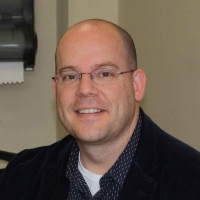
Bram Lutton
Aims: This workshop will...
- Serve as a launching point toward future Teaching and Learning (TAL) workshops, progressing toward a greater depth of understanding for how to help science, technology, engineering and math (STEM) students learn most effectively.
- Determine the needs of SICB members with respect to the following: understanding new teaching strategies that have been developed for STEM classrooms (specifically Introductory Biology), implementation of novel methods in the classroom, engaging academic administrators so that they understand and support utilization of new approaches.
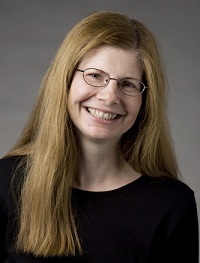
Susan Singer
- Address misconceptions associated with several key topics (see below) for improving STEM teaching and learning to assist with implementation of new teaching methods (in particular for this TAL workshop, Intro Bio).
- Develop a report for Integrative and Comparative Biology and science education journals describing what is accomplished with the TAL-Introductory Biology workshop. Include the role of SICB (in the context of societies in general) toward implementing improved STEM learning strategies.
Workshop Plan
Welcome: (Dr. Bob Podolsky, College of Charleston)
Introduction and Breakout Sessions: (Dr. Bram Lutton, Endicott College)
- AAAS Vision and Change Core Competencies and our national objectives for STEM education.
- Discussion of key topics and misconceptions in Scientific Teaching.
Intended outcomes:
- Describe and discuss specific examples of misconceptions about scientific teaching and student learning in biology that can be used to motivate other faculty and administrators to consider adopting and encouraging new teaching strategies on your campus.
Conclusion (Dr. Susan Singer, Carleton College) - SICB 2013 Moore Lecturer
Key Topics in Scientific Thinking and the misconceptions that accompany them
Modified from Handelsman et al., Scientific Teaching, 2007.
- Scientific Teaching
Definition: Teaching science courses in a way that represents the true nature of science (i.e., utilizes the Scientific Method) and approaches teaching with the same rigor as scientific research.
Common Misconceptions to address in Breakout Session:
- Scientific teaching requires extensive understanding of educational literature and assessment techniques.
- "If I'm not lecturing, then I am not teaching."
- Active Learning
Definition: the process in which students are actively engaged in self-directed (individual and team-based) learning strategies in the classroom.
Common Misconceptions to address in Breakout Session:
- Active learning takes too much time (for the professor and/or for the students) and occurs at the expense of learning content; content must be covered at all costs and other goals are secondary or irrelevant.
- If students are not taking notes, then they are not learning.
- Assessment
Definition: measuring progress toward an achievement of the learning goals via utilization of both formative and summative methods.
Common Misconceptions to address in Breakout Session:
- The point of assessment is not to help students learn but rather to measure what they have learned.
- I don't have a background in assessment needed for "scientific teaching."
- Diversity
Definition: the characteristics that make each student unique, each cohort of students unique, and each teaching experience unique. Includes everything in the classroom: the students, the instructors, the content, the teaching methods, and the context.
Common Misconceptions to address in Breakout Session:
- Students should be self-motivated to learn; it is the students' job to achieve, not mine.
- All Intro Bio students need to learn the same material in the same way for consistency.
- Institutional Transformation
Definition: the process of changing the culture of a campus to reflect a commitment to - and practices aimed at - improving undergraduate science education.
Common Misconceptions to address in Breakout Session:
- There are too few people with too little time to make real change at this campus.
- Teaching accomplishments don't matter on my campus.
Acknowledgments
We would like to thank the Society for Integrative and Comparative Biology for approval and financial support for the annual Teaching and Learning workshops. We would also like to thank Dr. Jay Labov and Dr. Susan Singer for their support in the organization of this workshop.